
A lawsuit over a 2014 prayer vigil hosted by Ocala officials in light of gun violence at the time has been settled over a decade after it began, with city officials agreeing to drop their appeal of a judge’s 2024 decision that the event was an “unconstitutional government endorsement of religion” in exchange for the atheist plaintiffs dropping their claim to potentially hundreds of thousands of dollars in attorney’s fees.
In September 2014, the Ocala Police Department began looking into ways to try to apprehend suspects responsible for a shooting spree that left several local children injured.
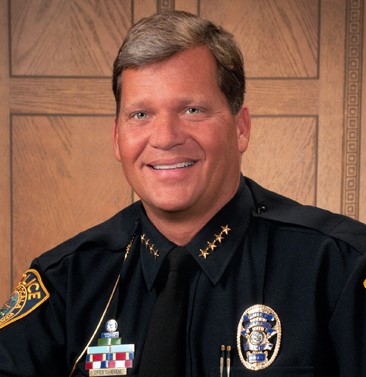
As part of a community effort to encourage witnesses to come forward, the OPD Chief at the time, Greg Graham, met with members of the Ocala faith-based community. During the ensuing meeting on September 17, 2014, the leaders discussed the idea of holding a prayer vigil. At the time, the late chief suggested the vigil was a “great idea.” The chaplains at the meeting created a letter that was then endorsed by the chief and posted on the Ocala Police Department’s Facebook page.
“We are facing a crisis in the city of Ocala and Marion County that requires fervent prayer and your presence to show unity and help in this senseless crime spree that is affecting our communities,” reads the letter signed by Chief Graham and Narvella Hayes, a community activist who lived in the area where the crimes occurred.
The letter went on to cite “numerous shootings” in the previous month that had “resulted in two children and an infant being hit by bullets.”
“I am urging you all to please support a very important ‘Community Prayer Vigil’ that will be held this coming Wednesday, September 24, 2014 at 6:30 p.m. to be held at our Downtown Square located in the heart of the City,” reads the letter from the leaders.

After the vigil was announced, several citizens, including those who eventually sued the city, contacted the chief and Kent Guinn, the former Mayor of Ocala. Those individuals expressed concerns over the police department hosting a prayer vigil, citing a violation of the United States Constitution.
Although Chief Graham originally expressed ownership over the vigil, indicating in public comments that he would not “call off” the gathering, he eventually distanced himself from the vigil and indicated that it was a community event over which he had no control.
“I think you are misunderstanding my role in this event. I am not leading the event, I am not speaking at the event, I will be in attendance at the event,” said Graham in an email to a citizen sent the day before the vigil.
Guinn embraced the vigil as a “government-sponsored event,” responding to one citizen’s allegation that the city was endorsing a religion by saying he thought the event was “great.” Guinn represented that he was a consistent and enthusiastic supporter of both the vigil and the chief.
“I’m proud to stand by my Chief and support him. Times like this do test leadership and that’s why we’re leading the community in this Prayer Vigil. Yes, we have heard from folks like you who don’t understand the constitution. We are doing absolutely nothing wrong,” reads an email sent from Guinn to a citizen before the vigil.
In a separate email responding to another citizen, Guinn said there was “nothing in the constitution to prohibit us from having this vigil. Not only are we not cancelling it, we are trying to promote it and have as many people as possible to join us.” Guinn went on in his email to say that every council meeting is opened with a prayer and that “we end the prayer in Jesus name.” Some of the emails Guinn received were sent by plaintiff Hale.
According to court records, Hale applauded the chief’s efforts to curb crime, but suggested that a vigil invitation violated “the Establishment Clause.” At the time, Hale suggested the city instead host a rally to encourage people to come forward with ideas about how to stop crime.
On September 24, 2014, the vigil was held at the Historic Downtown Square. Both Chief Graham and Mayor Guinn were in attendance. Although neither spoke, several individuals identified as Ocala Police Department Chaplains took the stage and spoke at the event.
Hale and Rojas also attended the vigil on September 24, 2014 to see whether or not there was a “violation of the Establishment Clause,” according to the judge’s order. Rojas described the event as a “Christian revival” that was “not a comfortable place for non-believers.” He said he attended the vigil to see if there was going to be a “violation of the Establishment Clause.”
In the years that followed, Chief Graham testified that he would have removed the Facebook posting about the vigil if the “Mayor had directed” him to do so. In 2018, a decision was found in favor of the plaintiffs using the Lemon test. That decision was vacated by the Eleventh Circuit after the Supreme Court’s decision in Kennedy v. Bremerton School District, which discarded the Lemon test in favor of historical practices.
The city argued over the years that the prayer vigil was permissible “because it fits in with other historical examples dating back to George Washington of government and prayer being intertwined, including legislative prayer and proclamations of National Day of Prayer.”
In June 2024, United States District Judge Timothy J. Corrigan issued a 50-page decision in the Middle District of Florida in favor of the plaintiffs, Art Rojas and Lucinda Hale.
In his decision, Corrigan made reference multiple times to the fact that neither party was interested in settling the lawsuit despite years of litigation and changes to key litigants since the case was originally filed.
Corrigan cited the passing of one of the original defendants in the lawsuit, Ocala Police Chief Greg Graham, who died in a plane crash in 2020, as well as a change in the leadership that supported the deceased chief (from former mayor Kent Guinn to the current Mayor of Ocala, Ben Marciano).
“The parties, both represented by lawyers who specialize in First Amendment religion cases, insist on going forward,” reads Corrigan’s decision from last June.
In his decision, Corrigan said the “decade-old event was conceived with good intent by persons of good will and that no real harm was done,” but the clause nonetheless served as a “bulwark against government sponsorship or endorsement of religion.” He concluded that if the prayer vigil was held by “individual or religious groups,” it would have been protected under the constitution, but instead, “because the city conceived, organized, promoted, and conducted the prayer vigil, it violated the Establishment Clause of the First Amendment.”
At the time, Corrigan ordered the city begin negotiating attorney’s fees owed to the plaintiffs.
After the decision, City Attorney William Sexton advised the council that it had “strong grounds” to appeal the judge’s decision in favor of the plaintiffs. At the time, Sexton and outside counsel Abigail A. Southerland of the American Center for Law and Justice argued that Corrigan erred in his decision and expressed confidence in an appeal.
During that discussion, and ensuing discussions both on and off and the record, Sexton discussed potential settlement terms and suggested that potential attorney’s fees could be in the hundreds of thousands. Both Southerland and Sexton also suggested that the appeal might get as far as the Supreme Court again.
During the Ocala City Council meeting on Tuesday, May 20, council members spoke briefly before voting unanimously to settle the lawsuit.
Right before the council issued its final comments and vote, Guinn and another former local politician offered public comments in favor of continuing the lawsuit. Guinn told the council that it should not “give up” after pursuing the lawsuit for 11 years because the city was “about to win” the case. He suggested the “eyes of the country” were watching Ocala on the case and that there shouldn’t be a dollar amount associated with “protecting and defending the constitution.”
“It’s not every day that you get a chance to do that,” said Guinn. He ended his comments by suggesting that if the city were to agree to drop its pursuit of the appeal, it might encourage other cities to not pursue their own prayer vigils.

Councilman Jay Musleh, whose time on the council predates the prayer vigil by two years, said he was ready to move on from the lawsuit once and for all.
“I’ve been involved in this case the entire time. We never should have gotten into this lawsuit. We need to get out of the doggone lawsuit. I believe in God, I believe he’s our savior. We don’t need to stay in this lawsuit to prove that. It’s a million dollar gamble, and I’m not going to make a million dollar gamble with taxpayers’ money on something that we may or may not win,” said Musleh.
The councilman went on to state that he has listened to attorneys talk about the case for over a decade and has asked very specific questions about the city’s exposure.
“This is a very losable lawsuit, okay. It is losable, it is not a slam dunk to win,” said Musleh. He concluded his remarks by saying the settlement was a great opportunity.
“We got the chance to settle. We’re admitting nothing, we’re paying nothing, we’re accepting no liability. It’s the smartest decision I’ve made up here in 13 years,” said Musleh.
Immediately after he concluded his comments, the council voted unanimously to approve the settlement.
Do you think the city made the right decision to settle the lawsuit, or do you think it should have continued to pursue the appeal? Share your thoughts in a comment below or, if you have more to say on the topic, write a letter to the editor.