

An Ocala woman was permitted to keep two emotional support goats on her property on the condition that she extend her fencing and expand a buffer after her neighbor complained of noise and living next to livestock in a residentially zoned area.
The reasonable accommodation request for the goats from Sheryl O’Connell was approved during the Marion County Board of County Commissioners regular meeting on Tuesday, June 17.
O’Connell, who lives in a 2.5-acre parcel along SE 41st Place in Ocala, said she got the goats (“Hank” and “Marshmallow”) after her husband died in the family’s living room last year.
“The reason why we got the goats was that my husband collapsed in the living room and died. And he and I were the ones that were home. And we had to do CPR and we got the goats to bring happiness,” said an emotional O’Connell next to a child. “We go out there, we feed them, we talk to them.”
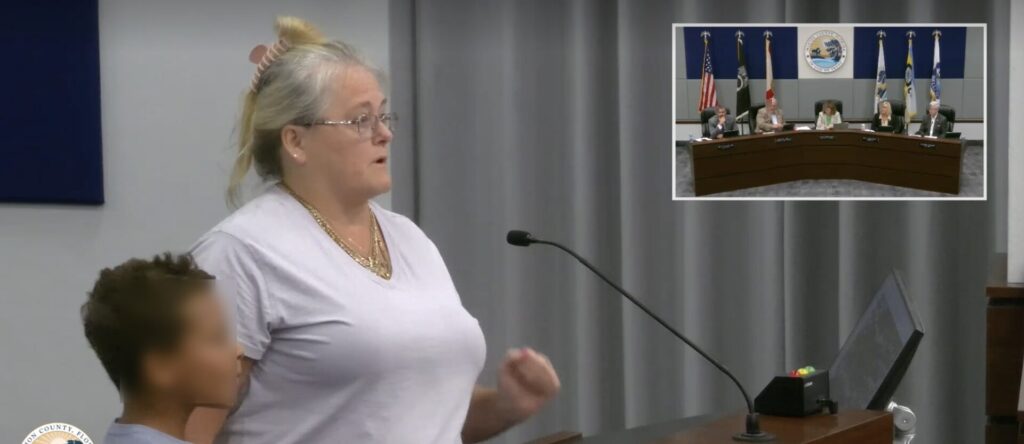
O’Connell said she didn’t know she “wasn’t zoned” for the goats because her “whole road” has horses, chickens, and other livestock. In addition to the goats, the homeowner says she also has a couple of dogs and chickens on the property.
At least 18 people living on properties surrounding O’Connell’s were notified of the issue. Only one letter of opposition was received by a neighbor, Mike Bigelow, who originally filed the complaint against O’Connell.
During Tuesday’s meeting, Bigelow shared his opinion on the matter.
“I was the one that filed the complaint initially. There was a rooster involved at the time, but he’s no longer – he didn’t make it,” said Bigelow. “I know they had a loss in the family last year, June of last year. I’m sorry for that. It’s not that I want to deny them an emotional support animal, I just don’t necessarily want to live next to farm animals,” said Bigelow.
He went on to explain that he bought his house in a “residential neighborhood” and that he expected, and wanted, to “live in a residential neighborhood.” The properties are both zoned R-1.
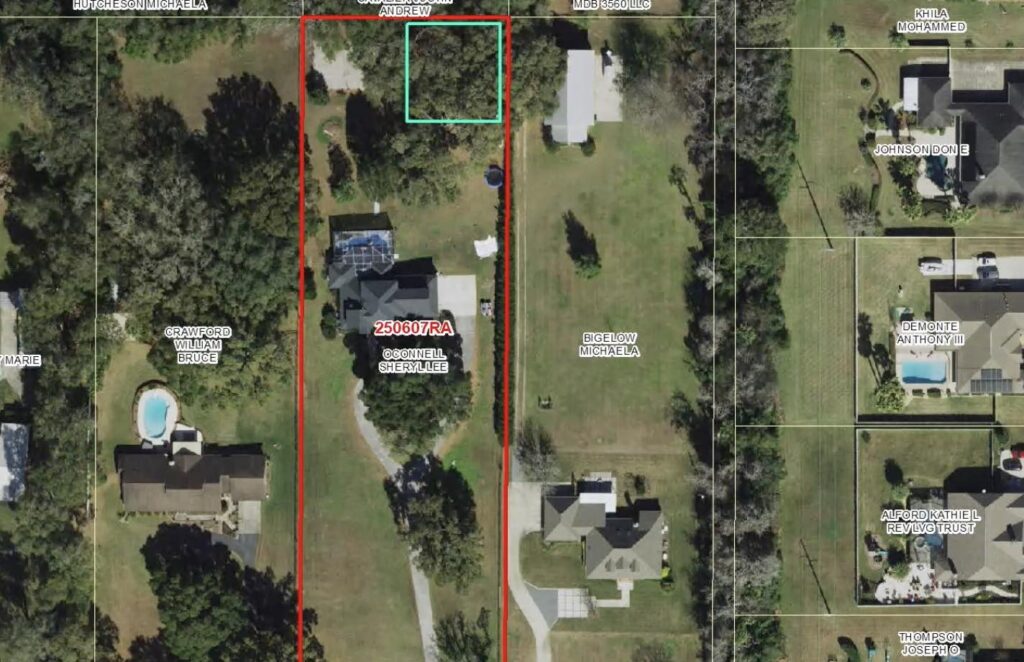
“The other goats are noisy when you go outside. If we sit on our back porch, we hear them,” said Bigelow. He asked if there were alternatives to the goats so that he didn’t have to live next to “farm animals.”
During the ensuing discussion by officials, Marion County Attorney Matthew Guy Minter said the issue wasn’t related to housing, disabilities, or a serious health condition, citing multiple acts that could be applicable if it were.
“If we have a medical doctor’s certificate, we don’t presume to disagree with what the doctor is saying. However, that’s not to say, as [Mr. Bigelow] just said, that the only type of emotional support animal there could be that would be adequate would be goats,” said Minter.
Despite MCBCC Chairwoman Kathy Bryant indicating that the board had a precedent of its hands “being tied” in the past when doctors issued medical diagnoses, Minter indicated that he wasn’t so sure a doctor could testify as to the type of support animal needed.
“I think [the board has] discretion to decide whether or not the conditions that are placed on this are adequate. And again, I think a doctor can indicate that there’s a need for an emotional support animal, but I doubt most medical doctors would be competent to testify that a particular kind of support animal is superior to some other kind of support animal,” said Minter.
In regards to quantity, Minter said that generally speaking, someone would be hard-pressed to say they need “multiple support animals,” saying he didn’t think “one or two” was beyond that point.
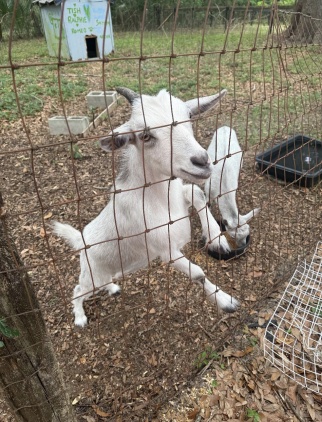
“I don’t think the number of goats in this case is an excessive number of goats…but I think it’s a question of whether or not there could be something that could mitigate the effect on the neighbor, if they could be moved,” said Minter. The county’s attorney made reference to previous requests where other neighbors moved animal pens farther away on their properties to accommodate adjacent landowners.
Commissioner Carl Zalak hypothesized that if O’Connell had two or more of some animals, including dogs, she would not be required to obtain a special exception and the animals might yield more noise than the goats.
After additional discussion that largely centered around the buffering between the two properties, the board asked O’Connell if she would be able to install additional fencing near the goats to appease Bigelow’s concerns.
Multiple commissioners emphasized that a 6-foot tall, “opaque fence” would solve the issue for all neighbors and allow O’Connell to keep her goats.
Despite the suggestion, Commissioner Craig Curry explained why he would not support the request.
“This is an R-1 property. People have an expectation, that when they buy in a residential neighborhood, that they can expect certain things. And then we come along with special use permits and try to retrofit things to accommodate an R-1 zoning, which affects the neighbors, and you end up with an animal farm next to you,” said Curry. “I’m not going to support this.”
Curry said there was an adequate amount of “additional animals” on the property and that goats were “pretty intrusive.”
“I just think that there’s more owed to the neighbor in this case. He’s got a big investment in his property. If this is bothersome to him, which he’s already stated, I think trying to retrofit the problem with fencing and stuff like that, I’m just not going to do it,” said Curry.
After Curry’s comments, Minter indicated that if the board determined there was no condition that would fairly balance the outcome, they could decide against the reasonable accommodation. He analogized the problem to religious accommodations in the workplace, saying that just because someone claims they need an accommodation doesn’t necessarily entitle them to it.
“It has to be a reasonable accommodation. And if you determine that this particular request in that location is not reasonable, then you can deny it,” said Minter. When Bryant indicated that it was the first she’d heard of that, Minter stated that during his time with the county, there had not previously been a reasonable accommodation that the county wasn’t able to work out between landowners.
Commissioner Matt McClain suggested that it was “reasonable” to have the goats in conjunction with a buffer, reiterating the fact that O’Connell would be allowed to have far more dogs on the property and that the dogs might be more bothersome and noisy.
After additional discussion, O’Connell agreed to install an opaque fence 10 feet past where her existing pen stops.
The commission approved the reasonable accommodation with the fencing condition by a vote of 4 to 1, with Curry being the lone dissenter.
That request was less than a month after another homeowner’s request to keep two pot-bellied pigs at her property in east Marion County was also approved.
Additionally, last Summer an Ocala couple received permission to keep their emotional support horses at their property.
A couple of weeks before that, another Marion County property owner was permitted to keep emotional support roosters at her home.