
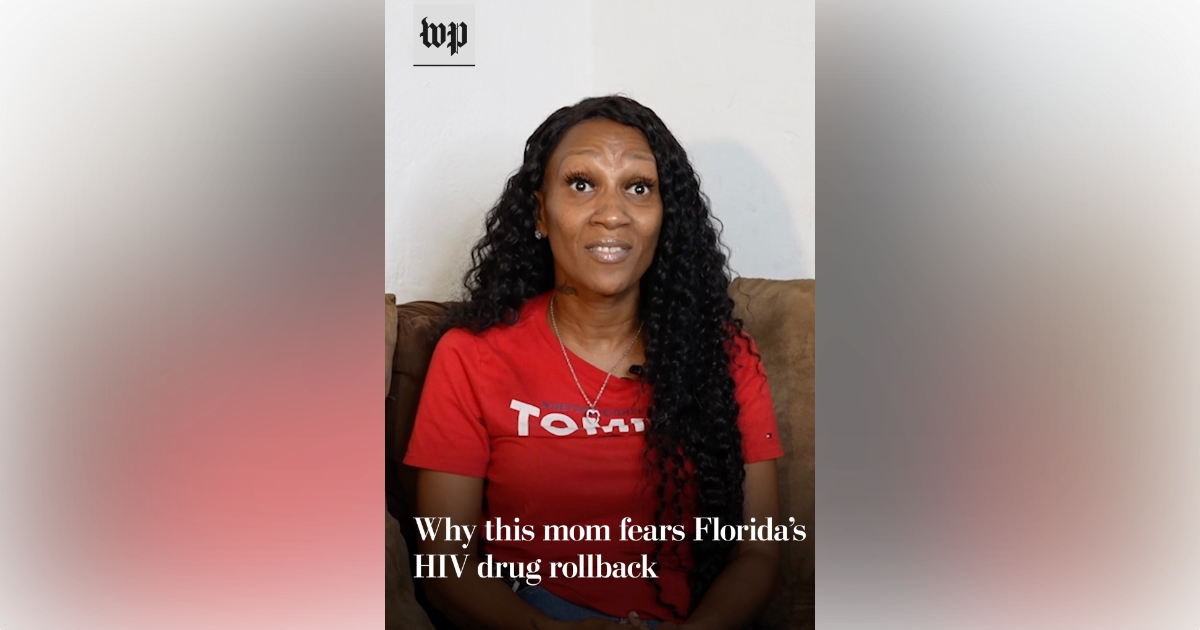
An Ocala mother who was featured in The Washington Post says she fears losing access to affordable HIV medication, as the state moves to impose new income limits on access to funding for the drugs due to “rising health care insurance premiums” and a dearth in federal funding.
Tori Samuel was featured in a report by the Post on Sunday, February 1, about the upcoming changes to the state’s AIDS Drug Assistance Program (ADAP).
“It’s chaotic right now with people not knowing the fate of their healthcare,” Samuel told the Post in an interview. A mother of three, Samuel says that her daily medication regimen keeps her viral load suppressed, or “undetectable.” This status ensures she remains healthy and cannot transmit the virus to her family.
“None of my kids are HIV positive. I’ve been with my husband for 15 years. He is not HIV positive. That’s what our medicines do for us,” Samuel explained in the interview. “I have a beautiful family because I’m virally suppressed. My kids need me, if I get down sick or I’m in the hospital… how can I be the mother to my twins and help them?”

The Post feature comes as the Florida Department of Health prepares to implement new eligibility requirements for ADAP next month. Citing rising health care premiums and a lack of additional federal grant funding, the department announced it will limit direct medication coverage to individuals living at or below 130% of the Federal Poverty Level.
For a family of five, the federal poverty level for 2025 was established at $37,650, making 130% just over $48,000 (~$4,000 a month). For a family of four, the 130% mark is $41,795, or around $3,482 a month.
In a statement, state health officials said the adjustments were necessary to prevent a budget shortfall of more than $120 million and to “ensure resources [for] the greatest number of individuals within our funding constraints.”
The story by The Post suggests Samuel’s family currently earns just over $3,800 a month. The mother of three says the financial implications of losing coverage are insurmountable, noting that a single 30-day supply of her medication, Biktarvy, can cost between $5,000 and $6,000 without assistance.
“Who can afford that?” Samuel said. “I look at my kids, I look at my husband, I look at my life and seeing how God has blessed me where I’m taking my medication, I’m doing great. And that fear of possibly, ‘Oh you may not have access to this come March 1st.’ That freaks me out.”
The upcoming changes will be put into effect on March 1. State officials have indicated they will cover costs during a two-month transition period to help residents connect with alternative services.
“How can I be the wife to my husband and be the advocate that I can be for so many people, if I’m not healthy?” she asked.
To read the complete article, visit the Washington Post. To read about the patient assistance programs for individuals who will be impacted by the upcoming changes, visit the Florida Department of Health AIDS Drug Assistance Program online.
Join the conversation on Ocala-News.com