
Marion County commissioners will hold the first of two public hearings on Thursday to determine the future of how private airports and residential fly-in communities are approved and expanded throughout the area.
The public hearing is scheduled for 5:30 p.m. at the McPherson Governmental Complex (601 SE 25th Avenue) in Ocala. The meeting marks a critical step in the county’s effort to formalize aviation regulations within its Land Development Code.
During the meeting, staff will present and consider several specific amendments to Article 4 of the code, including the creation of a new section that defines a fly-in community as a development designed to ensure a well-integrated layout that accommodates the unique requirements of aircraft operations within residential areas.
The proposals arrive before the board following a Feb. 4 public hearing held by the Marion County Land Development Regulation Commission (LDRC), where the measures received a unanimous recommendation for approval.
During that earlier session, Busy Shires, who represents Horse Farms Forever, advocated for reducing the maximum aircraft hangar height from 50 feet to 30 feet. While the initial draft limited accessory aircraft hangars to 50 feet, the updated staff recommendation post-LDRC reflects a proposed reduction to 35 feet.
Dirk Leeward also questioned potential terminology conflicts during the meeting, warning that requiring a Planned Unit Development (PUD) process for established neighborhoods could create regulatory hurdles.
Under the current draft, any new or geographically expanded fly-in community must be approved by the Board of County Commissioners through the PUD process. An expansion is strictly defined as increasing geographic boundaries or land use densities and intensities beyond what was previously approved or vested.
However, the code offers protections for existing neighborhoods, stating that fly-in communities lawfully established before the ordinance will be considered a legal conforming use regardless of their zoning district. If an existing community expands, the county may only review and condition the expanded area and may not impose new conditions on the previously approved portion.
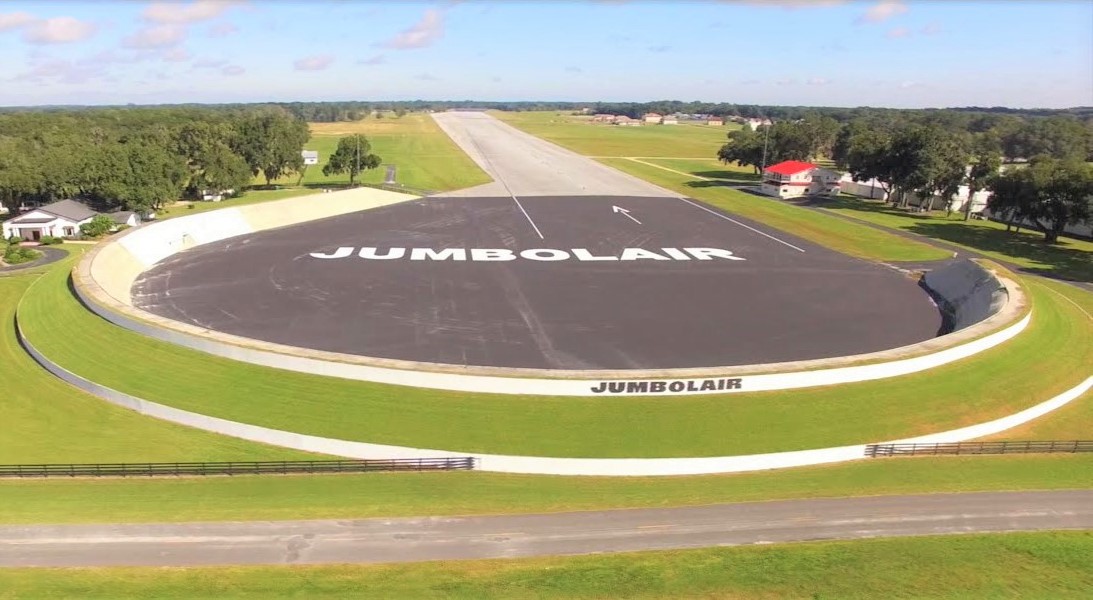
That would apply to communities like Jumbolair, which the private fly-in community in Ocala that is home to John Travolta and lays claim to the largest licensed private runway in the United States.
The estimate suggests that zero businesses will be impacted, noting that the ordinance primarily clarifies an existing process to provide better predictability for development. County officials estimate that approximately 20 to 30 airports will be defined under the new rules, and about 10 fly-in communities may be eligible for recognition.
For private airports, the amendments in Section 4.3.29 mandate that any new facility or geographic expansion obtain a Special Use Permit (SUP) or PUD approval.
Attorney Jessica Icerman, representing aviation interests at the February meeting, emphasized the importance of making the language “unmistakably clear” so that ongoing aviation activities at currently approved airports do not inadvertently trigger the need for new permits.
The county has noted that it will not impose conditions on matters already preempted by the Federal Aviation Administration (FAA) or the Florida Department of Transportation, such as airspace operations and lighting.
The meeting on Thursday is the first of two required public hearings. The second public hearing is scheduled for Monday, March 23, at 9:00 a.m.
What are your thoughts on the proposed changes? Share them in a comment or a letter to the editor.