
Ocala and Marion County leaders say they are united in their desire to ban the sale of kratom products in the area, stressing the need to create new local legislation in the absence of state and federal regulation.
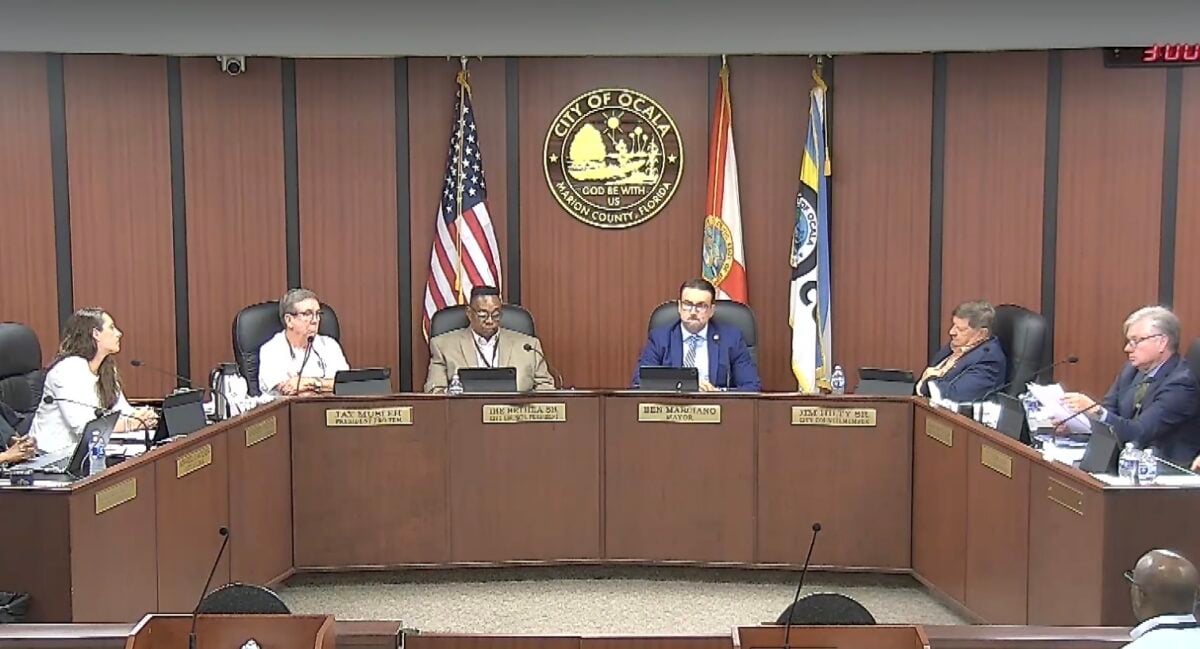
On Tuesday, the Ocala City Council spoke extensively on moving forward in partnership with the county to ban the sale of kratom products.
During the discussion, Mayor Ben Marciano cited several personal conversations he has had with doctors and law enforcement representatives about overdoses in the community related to the substance.
“I talked on kratom about six months ago and how serious it is and it’s becoming more and more of an issue… At OPD, we’ve seen that people have overdosed with packages of kratom next to them,” said Marciano. “Numerous people have reached out to me in the last six months, talking about what kratom has done to them and their families. Kratom is now illegal in nine states; states are continuing to pick this up and see how serious it is.”
The mayor went on to cite California’s ban on the substance. As of mid-July, California Governor Gavin Newsom’s office reports that his state has achieved “98% compliance” from state-licensed alcohol retailers in removing thousands of kratom products from their shelves.
“We cannot wait for our state to address this. This is a serious issue and we see that lives have already been lost,” said Marciano.
The mayor suggested that a ban through code enforcement, and not through potential criminal charges associated with the product, should be seriously considered by the city.
“If we wanted to make it to where they’re breaking the law, it’s a second misdemeanor. We could go that route, but we feel like the code enforcement option would be the easiest, to keep it out of the courts… essentially to use our law enforcement to enforce it,” said Marciano.
He cited Sarasota County’s ordinance banning the substance as being “effective” as well.
“I personally believe in the next year or two, the state will have to address it, but why wait? We have lives that are being lost, we have kids’ lives that could possibly pick this stuff up,” said Marciano.
Ocala City Attorney William Sexton confirmed he was in receipt of the county’s ordinance on the matter, noting the county was ready to move forward with its process following the mayor’s remarks on Tuesday.
Sexton said the city could follow suit with the county or develop a more detailed plan for Ocala, suggesting there was no established framework to follow because the matter was new territory.
“Other than Sarasota County, there aren’t a lot of other jurisdictions that have done it. There aren’t any other jurisdictions that I was able to find that have done it,” said Sexton.
Councilman Barry Mansfield was in agreement that the city should take action.
“I believe we should take a stance… What can we legally do? The federal government hasn’t outlawed it. What can we legally do now? Is there any way that we can put higher standards on the people that sell this stuff if it does get into the hands of somebody younger, that they can just be shut down totally?” asked Mansfield.
Mansfield said that during talks with individuals in the medical marijuana industry, he learned of concerns about the testing of kratom and its potency. He suggested the products not being federally regulated meant there was no way to determine “what you are buying.”
“You just don’t know what you’re getting,” said Mansfield. “There’s no testing that’s done at the federal level; that’s the reason they don’t want to even touch it.”
Mansfield suggested that maybe the city could put pictures of what an individual “might look like” if they were to use kratom on products associated with it, citing a method used in Europe on cigarette containers.
Kratom is derived from the leaves of Mitragyna speciosa, a tropical tree native to Asia. The plant contains a variety of alkaloids, which are naturally occurring organic compounds with pharmacological effects that are used for various applications.
One of those alkaloids is 7-hydroxymitragynine (7-OH). According to the United States Food and Drug Administration, 7-OH comprises less than 2% of the total alkaloid content in natural kratom leaves. Despite its relatively small presence in kratom, 7-OH has been the target of multiple state and county governments across the nation for its highly potent effects.
In closing on Tuesday, Sexton explained what the county and city might try to accomplish in their ordinance.
“The current state law makes it a crime to sell this to individuals under 21 years of age. I think what the county’s ordinance does is also attach to the code enforcement process the ability to revoke the certificate of occupancy for the place that’s selling it. So instead of just making it a crime for an individual to sell it, and that person gets arrested and goes to jail, I interpret the county’s ordinance to also empower them to close the business by revoking its certificate of occupancy,” explained Sexton.
City Manager Pete Lee cited the DEA’s recent action to temporarily classify 7-OH as a Schedule 1 substance as being an important step in the city’s fight.
Lee, Sexton, and the others were in agreement that as the state and federal governments push forward with more legislation on the matter, the city and county’s paths forward may become easier to navigate.
During a discussion in council chambers on kratom in December, several local residents shared testimonials about their personal battles with addiction and the benefits of kratom.
Last August, Florida Attorney General James Uthmeier issued an emergency ruling that classifies the isolated compound of 7-OH as a Schedule 1 controlled substance in the state of Florida.
A Schedule 1 substance in Florida is defined as having a “high potential for abuse” with no “currently accepted medical use in treatment in the United States.” Uthmeier’s rule, which took effect on August 13, 2025, makes it illegal to “sell, possess, or distribute any isolated or concentrated form of 7-OH in the state.”
What are your thoughts on the city’s proposed stance towards kratom? Share them in a comment or a letter to the editor.