
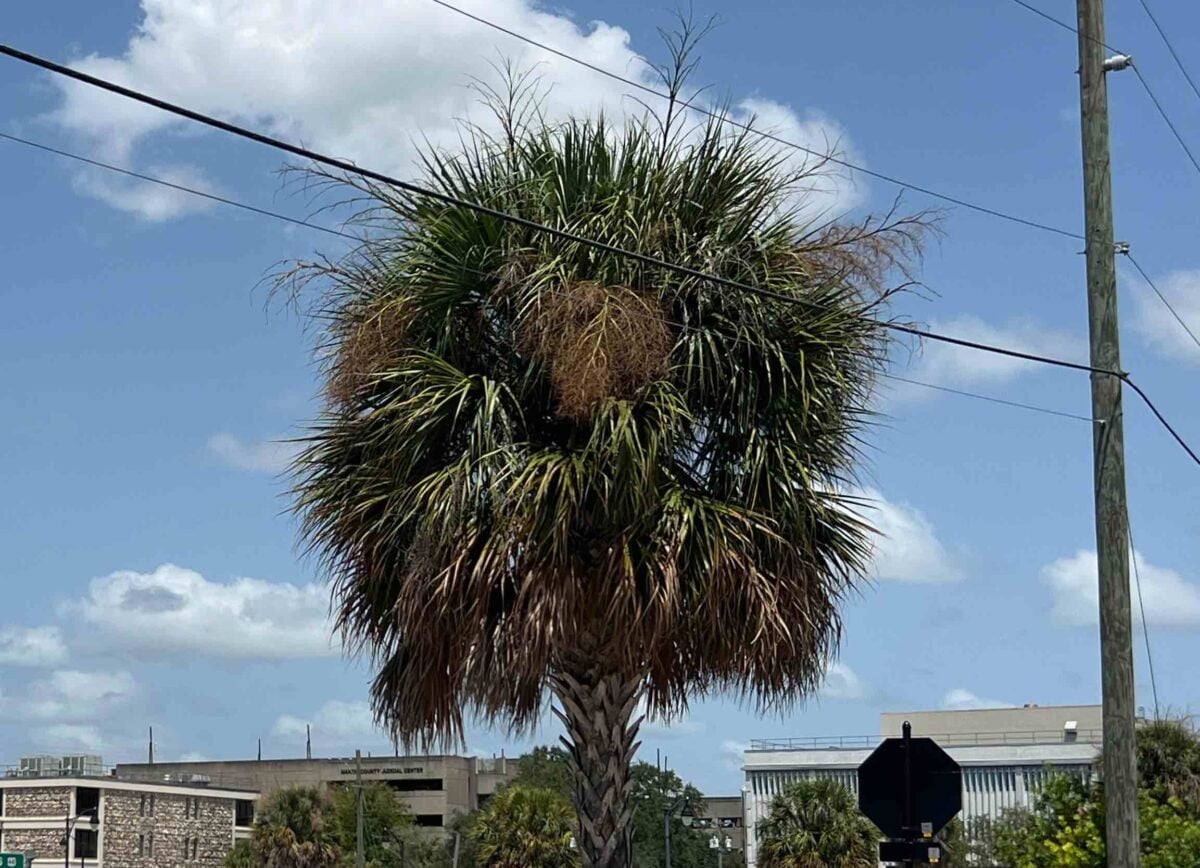
An Ocala farmer who tends to 40 acres of palm trees urged city officials on Tuesday to take action against a Texas-based disease that has been infecting and killing local palm trees, saying he has counted at least 89 trees around the city in need of removal.
Roger Johnson addressed the issue during the Ocala City Council’s regular meeting on Tuesday, June 3.
Johnson, who spoke on behalf of the landscaping company Quality by Design, said although he had seen symptoms of the disease in palms all around the city, the general public seemed largely unaware of the issue.
“I know not everybody knows a lot about palm trees, but it’s kind of an issue. If you drive around town, you don’t have to know a lot to know there’s an issue going on,” said Johnson.
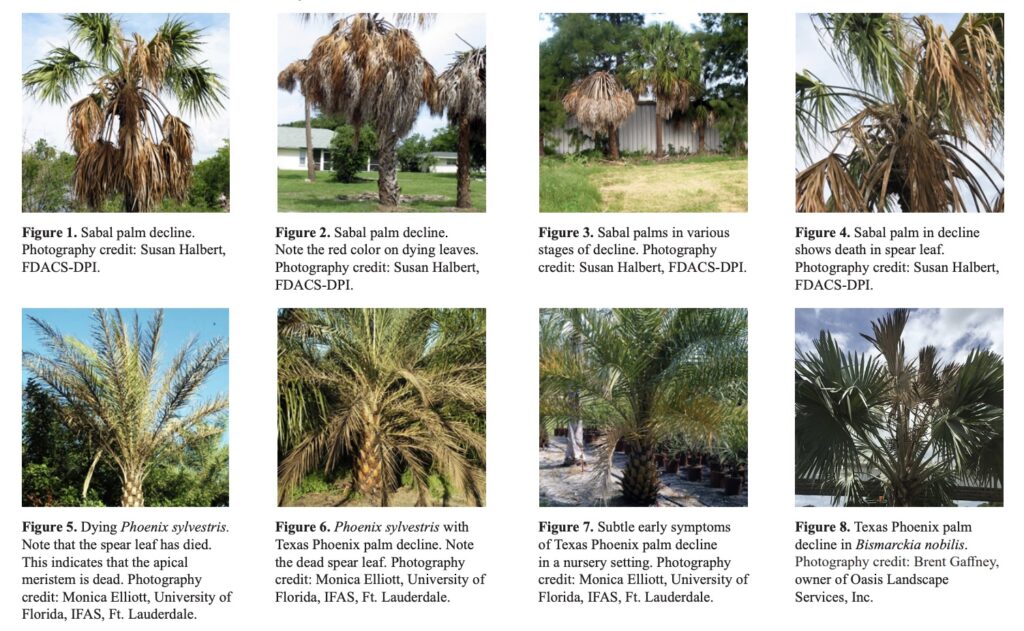
The farmer, who grows Sylvester palm trees, explained that the disease started in date palms and is now spreading to Florida Sabal palm trees. He said the disease was impacting hundreds of local properties and dozens of trees managed by the city.

“There needs to be a quick action in the city to remove what’s dead,” said Johnson, citing at least three palm trees on State Road 40 that have been dead so long that vines have been growing on top of them.
Johnson went on to suggest that multiple trees along the interstate and other parts of the city had also probably been killed by bugs carrying the disease from tree to tree. He said he was working hard to protect his trees and wanted to spread the message.
“I put a lot of blood, sweat, and tears into doing the inoculations on my farm to make sure that I can still sell trees,” said Johnson, who has lived in Ocala for the past four years. “This issue we have with the palm trees is kind of an emergency.”
The disease in question is known as Texas Phoenix palm decline (TPPD) or lethal bronzing disease (LBD). It is a fatal, systemic disease caused by a bacteria that is spread by sap-feeding insects. The disease is characterized by leaves bronzing on the palm tree, premature fruit dropping, and the collapse of spear leaves.
According to Ocala City Manager Pete Lee, his staff has been in an ongoing battle addressing the issue.
Lee said that city staff has inoculated a lot of the city’s trees and removed many of them.
“It’s a constant battle,” said Lee.
In support of Johnson’s claims, Councilman Jay Musleh cited at least three dead palm trees at the Ocala Golf Club in the east side of the city.
After Musleh made his comment, Johnson suggested that he had counted at least 89 palm trees owned by the city that were “in need of help.”
Johnson concluded his remarks by saying that, until the country can find a cure, the best course of action is to remove the tree.

“We need to get these trees out of these properties,” said Johnson. He indicated that anyone pruning these trees should disinfect their equipment to ensure they are not passing the disease between plants.
Although Johnson said he has been working with the University of Florida on a cure for the disease, currently, there is no cure for TPPD/LBD. Once a palm tree is infected, the disease is fatal. The only recommended action is to remove the tree at that point.
Have you come across palm trees with Texas Phoenix palm decline/lethal bronzing disease in Ocala? Share your photos and comments with us. If you have more to say on the topic, consider writing a letter to the editor.