
Marion County officials are looking to clarify rules on temporary “roadside vendors” and food truck parks in light of the closure of a popular site in August that was forced to close for lack of appropriate permitting.
The revisions to the county’s land development code will be discussed during the Marion County Land Development Regulation Commission’s regular meeting on Wednesday, October 1.
According to a county staff report, new language has been proposed to update the county’s provisions on roadside vendors, including clarification on what qualifies as a roadside vendor, limitations on how many may gather in a space before a minor or major site plan must be submitted, inclusion in the specialty business (B-3) zoning classification (where roadside vendors are allowed by right), and clarification of the intended temporary nature of roadside vendors.
The first listed revision changes the name of “roadside vendors” to “temporary roadside vendors” and redefines the words as a person “or business” who sells fruits, vegetables, produce, peanuts, firewood, and Christmas trees. The amendment further describes the roles of temporary roadside vendors by clarifying that they should “function temporarily” and that any types of permanent structures are prohibited.
The definition was amended to also include those who sell “dry goods” and “homemade crafts” from a roadside stand. That definition would also be amended to remove the word “fireworks.”
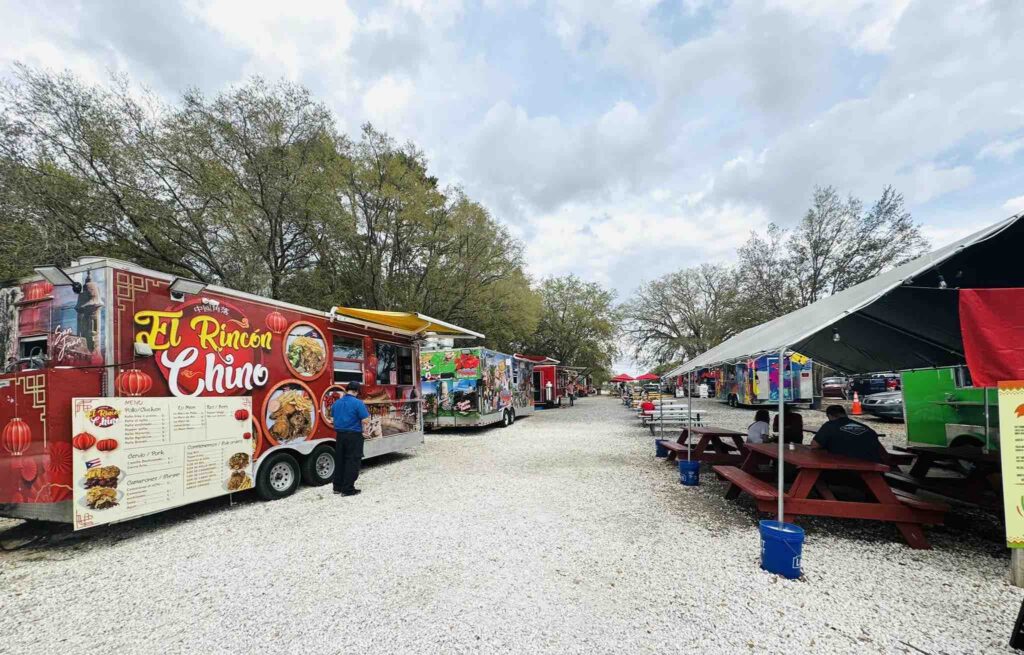
The proposed amendment would extend the definition of temporary roadside vendors to any “hot dog cart or mobile food dispensing vehicle (‘food truck’) that has received approval from the Florida Department of Business and Professional Regulation to operate.
The amendment would also remove a section requiring merchandise to be sold from a “flame retardant tent or pole-barn,” and criteria describing seasonal firework sales.
The amendment adds new language to require either a minor or major site plan in instances where two or more temporary roadside vendors are operating on a “single parcel of land or shared area,” or if they are not operating in a temporary capacity.
Any submitted plans would have to be “consistent with the underlying land use designation and zoning classification for the property.”
The new site plan language comes just a month after the closure of a food truck park on SW Highway 484 in south Ocala.
That park closed at the end of August and the space has since been vacated. At the time, county officials sought more permanent upgrades to the parcel, appropriate permitting, and zoning changes for the site to remain in operation.
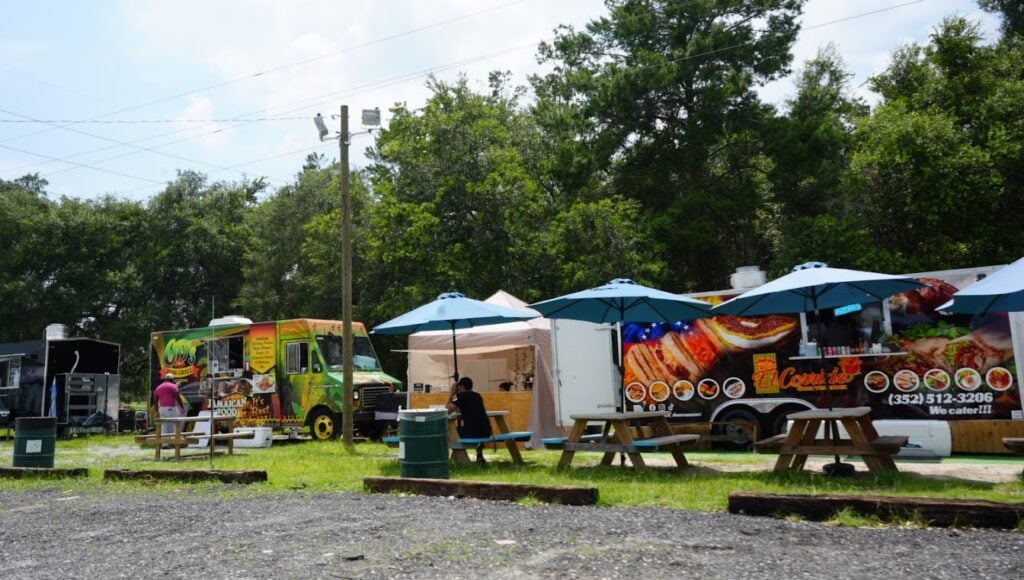
In addition to the language limiting the number of temporary food trucks on a parcel, the proposed revisions also detail the types of facilities that would require building department approval and further clarification on maintenance of parking areas maintained by the vendors.
“Temporary roadside vendors conducting sales from a tent, pole-barn type facility, or other temporary structure shall obtain all applicable building department approvals,” reads another portion of proposed amendments.
The Marion County Land Development Regulation Commission next meets on Wednesday, October 1, at 5:30 p.m. at the McPherson Governmental Complex (601 SE 25th Avenue). After the commission reviews and considers the proposed land development amendments, it will make a recommendation for approval or denial. The Marion County Board of County Commissioners will have final say on the matter during an upcoming meeting.
What are your thoughts on the proposed changes? Write your comments below or share them in a letter to the editor.