

After hearing from residents about their personal battles with addiction and the benefits of kratom as an alternative to alcohol, Ocala Mayor Ben Marciano stood firm on his stance against the plant, saying children have confessed their addictions to him and that he knows individuals who have lost loved ones from kratom overdoses.
The topic was discussed towards the end of the Ocala City Council’s regular meeting on Tuesday evening.
Kratom is derived from the leaves of the Mitragyna speciosa, a tropical tree native to Asia. The plant contains a variety of alkaloids, which are naturally occurring organic compounds with pharmacological effects that are used for various applications.
One of those alkaloids is 7-hydroxymitragynine (7-OH). According to the United States Food and Drug Administration, 7-OH comprises less than 2% of the total alkaloid content in natural kratom leaves. Despite its relatively small presence in kratom, 7-OH has been the target of multiple state and county governments across the nation for its highly potent effects.
During the public comments portion of Tuesday’s meeting, multiple residents took the opportunity to share their support for the use of kratom. Many cited their experiences with post traumatic stress syndrome, depression, alcoholism, and addiction that they battled or that they helped others battle. They cited the positive impacts of kratom and lent their support to local businesses who legally sell it.
Jimmy D. Voelkel, who is a disabled combat veteran and resident of Marion Oaks, said the topic hit “close to home” because of his history with PTSD and self-medicating with alcohol.
“I live in a constant state of hyper vigilance, always surveying for he next threat,” said Voelkel.
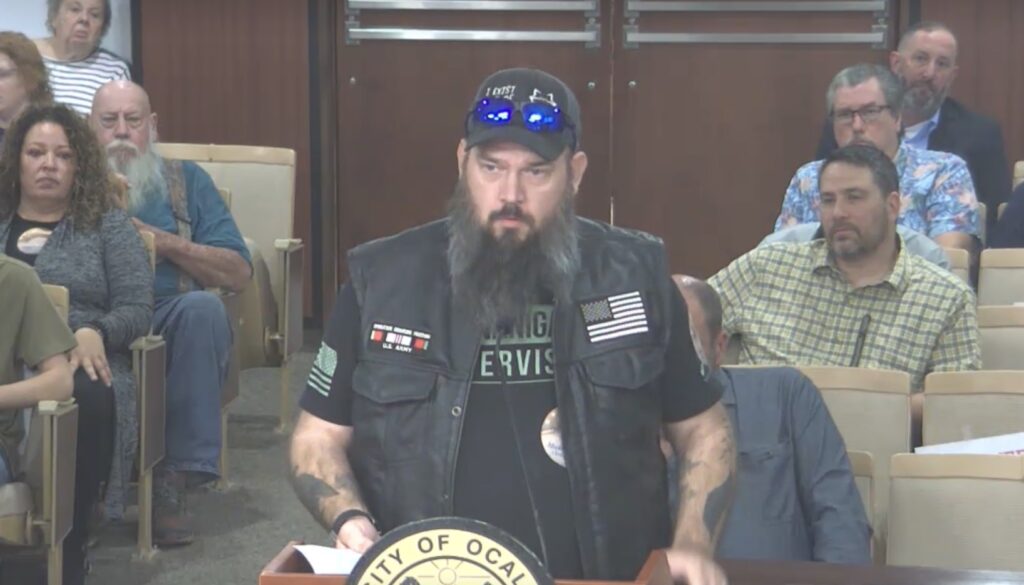
Voelkel said he avoids bars and has to be very careful about where he spends his time. He indicated that Muddy Lotus, a local business that has been vocal in its defense of kratom, is an alcohol-free space that supports veterans like him by offering alternatives to alcohol. He stressed that places like Muddy Lotus offer a chance for “connection without chaos.”
“I can be around people and not feel on edge there,” said Voelkel. He said staff and customers at Muddy Lotus were “calm, respectful, and supportive.” He urged council members to do further research on kratom before making a decision that would possibly shut down a business.
Dillon Craig Aldridge, who manages Ocala Kava Bar Muddy Lotus Tea, said he had seen the impacts firsthand of alcohol, citing his own family’s struggles.
“I am the only man in my family who doesn’t struggle with alcoholism,” said an emotional Aldridge. As he fought back tears, the father and martial arts teacher said he had worked in the bar and food service industry for years prior to his time with Muddy Lotus and that he was very familiar with the violence, aggression, addiction, and withdrawal associated with alcohol dependency.
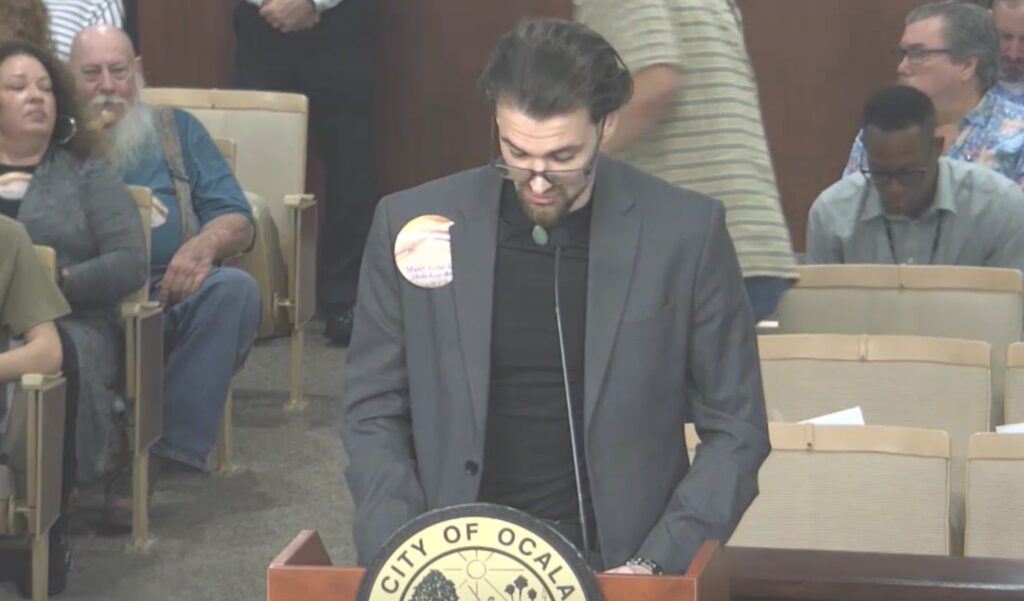
“It is the reason that I take this topic so seriously,” said Aldridge. He went on to clarify that Muddy Lotus only sells kratom to adults over the age of 21 who present valid identification.
Aldridge stated that he uses kratom regularly and has taken several breaks from it in the past. He stressed that he has never had any form of withdrawal and has never developed a dependency on the plant.
He closed his remarks by stating that Muddy Lotus was one of the only alcohol-free places where individuals of all backgrounds, races, creeds, and colors can gather without the pressures and problems created by social consumption of alcohol.
“All I ask is that any decisions about kratom be based on experience and not on fear or misunderstanding,” said Aldridge.
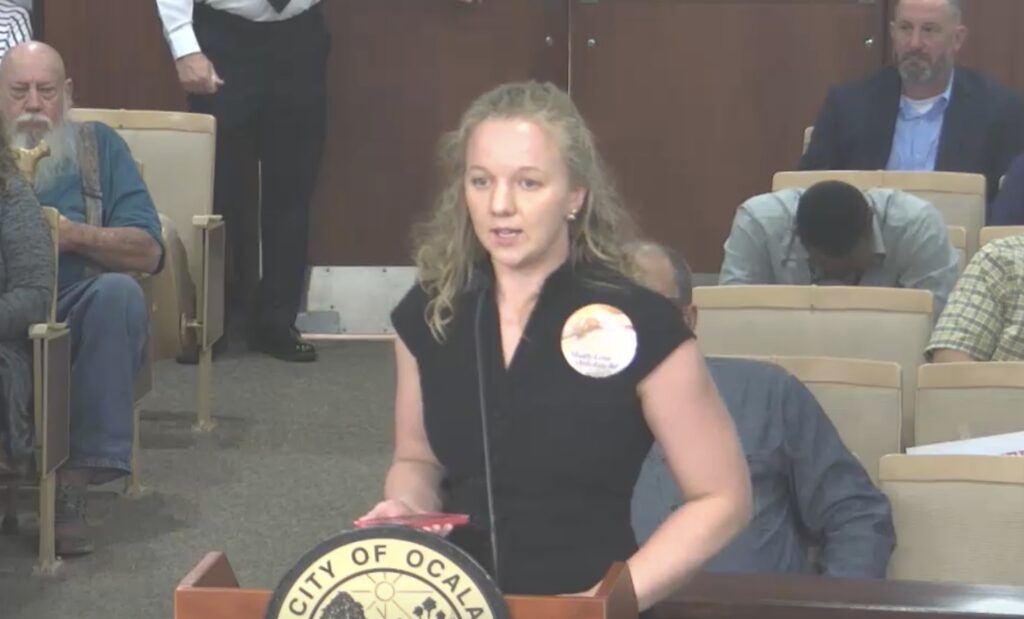
Brigitte Smith stressed the distinction between kratom and 7-OH during her comments to the council. Smith, a registered nurse who has suffered several physical ailments during her life, stated that 7-OH was “50 times more potent” than kratom in its natural state. She encouraged the council to make an informed decision on the plant and the science behind it, and separate it from the alkaloid that causes “trouble.”
Serena Mojica said she believed that some of the criticisms levied at kratom have been based on fear and misunderstanding. She said it was misleading to label it as a “gateway drug,” stressing the importance of elected officials making informed decisions based on data and not opinion.
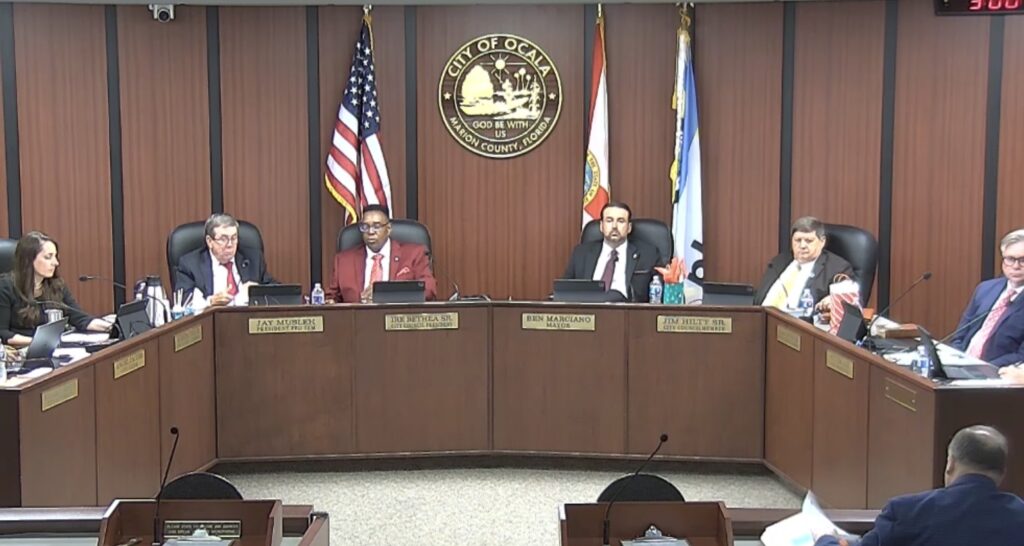
After public comments closed, Ocala Mayor Ben Marciano shared his opinion about the matter during the “Mayor’s Comments” portion of the meeting.
“I’ll be honest. I don’t know the difference between synthetic kratom and the real leaf kratom. What I do know is real stories that I hear from kids every day,” said Marciano.
The mayor cited a recent speaking engagement to 500 students last month in which he shared his struggles with addiction.
“I was alarmed to see how many kids came up to me and told me they’re struggling with mental illness and addiction in the eighth grade,” said Marciano. He said several of the students mentioned kratom as the drug they’re currently using.
Marciano stated further that his friends in the treatment center business have told him that addicts are relapsing through the use of kratom.
“It is causing the obsession. Now, do they stay on it? I don’t know, but they try it, it triggers the obsession, and they go back to using hardcore drugs. I’ve seen it. One of my close friends with 10 years of sobriety is out using hardcore drugs right now because he tried kratom,” said Marciano.
The mayor opined that the topic needs to be “addressed at the state and federal level.” He cited seven states that have completely banned kratom, as well as two cities in south Florida. He concluded by saying that although it may be working for some people, he’s heard from several individuals about kratom causing harm.
Marciano said he had recently received two text messages from different people who had family members pass away from kratom use. In one instance, the individual got an infection from taking it.
“I think we do have a bigger problem. I think these smoke shops that are opening on every corner and I think the gas stations that are selling synthetic drugs right next to candy…I think we need to look at that, and we’ve got to think of ‘who do we want to be’ as a community?” said Marciano. “I want to be known as a place that supports kids, supports family, supports health, and I have some ideas I’d like to bring back to you at a future date.”
The comments come two weeks after Marciano asked city staff to look into ongoing legislation to remove kratom out of stores across the state. At the time, he stated that he believed kratom is a potential gateway “drug” that leads children into “more serious” alternatives.
In response to Marciano’s original comments, a local business owner shared their experience with the mayor, and a dozen residents wrote letters to share their own opinions.
The comments by the mayor followed Florida Attorney General James Uthmeier’s emergency ruling in August that classifies the isolated compound of 7-OH as a Schedule 1 controlled substance in the state of Florida.
A Schedule 1 substance in Florida is defined as having a “high potential for abuse” with no “currently accepted medical use in treatment in the United States.”
Uthmeier’s rule, which took effect on August 13, makes it illegal to “sell, possess, or distribute any isolated or concentrated form of 7-OH in the state.”
What are your thoughts on the topic? Share a comment below or, if you have more to say, write a letter to the editor.