
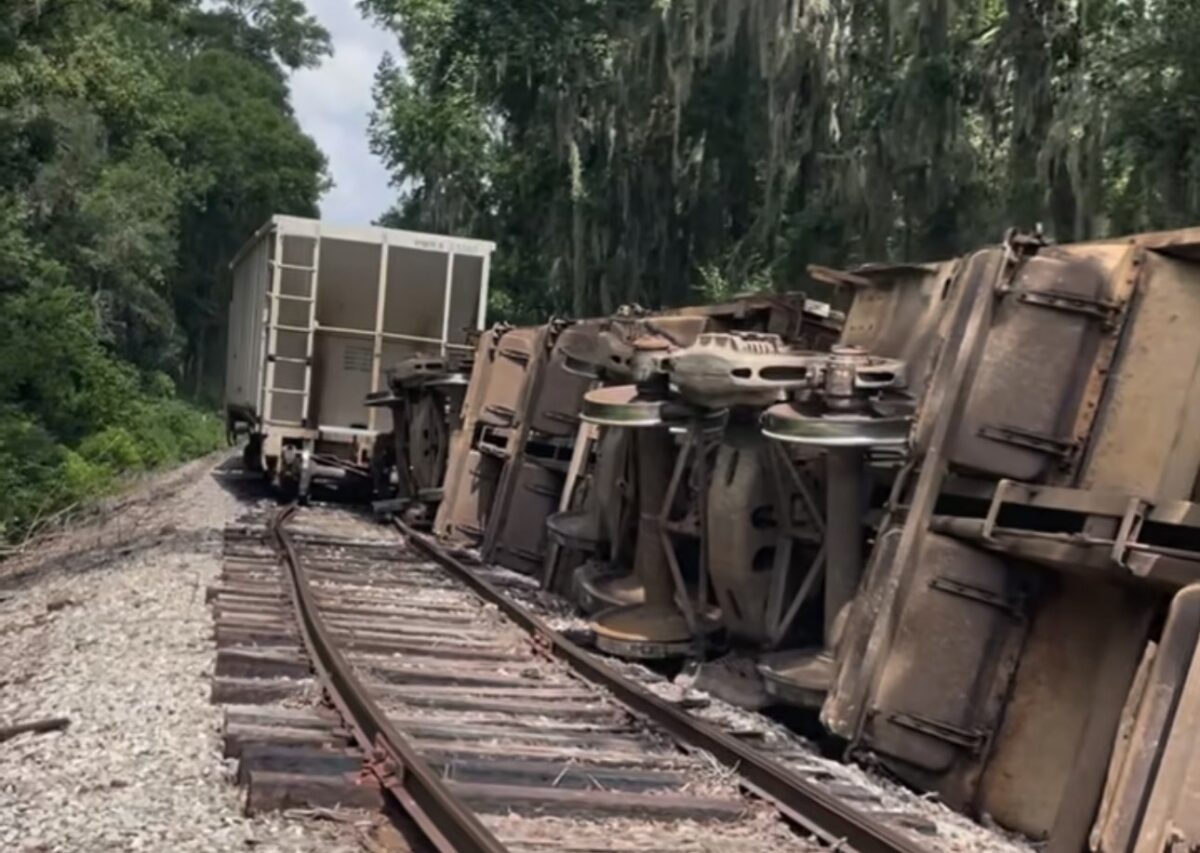
Ocala officials are once again looking into permanently removing the railway in downtown and ending any future railroad services in light of two derailments this year, nearly four years after a similar conversation under nearly identical circumstances.
The Ocala City Council discussed the potential railway changes during its regular meeting on Tuesday evening. The discussion among the council came in light of two major derailments that impacted the city recently.
According to Ocala Fire Rescue Chief Clint Welborn, a train that derailed behind the Cypresside Townhomes along SE 14th Avenue on July 25 has remained in place until a crane can be brought in to remove it.
In addition to the derailment in July, another train partially derailed in the 500 block of NW 10th Street in Ocala on June 19.

During Tuesday’s meeting, Ocala City Manager Pete Lee emphasized that the city was fortunate that the most recent derailment occurred on the opposite side of the multi-family community next to the railroad tracks.
As the discussion continued, city officials questioned what might have happened if some of the hazardous materials that were on board the train had spilled out into the area.
“What, hypothetically, if you know, would have happened if the tanker car had also fallen? With the toxic substance?” asked Ocala City Council President Kristen Dreyer.
Chief Welborn estimated that there would have been a “good possibility” of leakage of the toxic substance, which would have required a response from the Environmental Protection Agency and an evacuation of the surrounding area.
“It just depends on the size of the leak,” said Welborn, before confirming that the substance on board the train that derailed was toxic.
When asked who was in charge of regulating these types of incidents, Welborn indicated that the railroad company controlled its own payloads and that the government would likely only get involved if it impacted the surrounding environment.
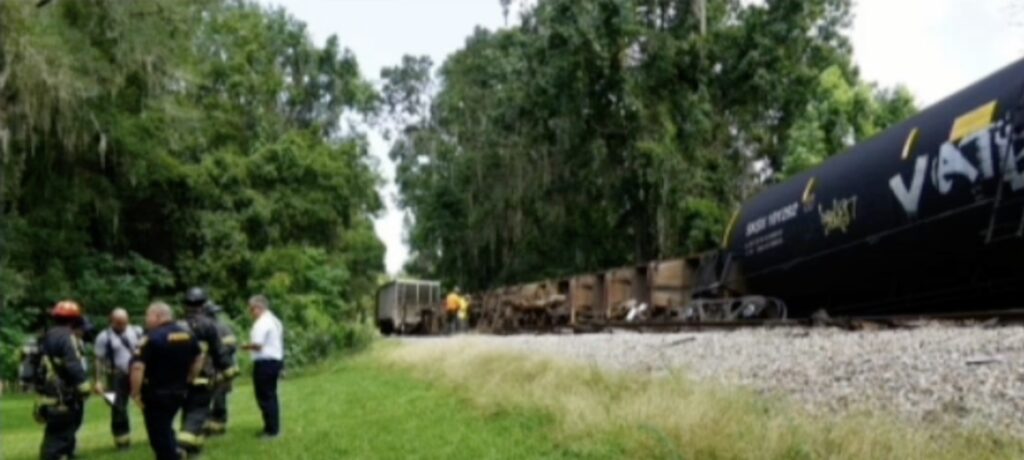
“We avoided disaster one time,” said Dreyer who, along with councilman Jay Musleh, agreed that the two recent derailments were two too many.
“So we’ve avoided two potential disasters. I think it’s time that we get a little proactive in contacting – there’s got to be – the federal government regulates every aspect of our lives. I can’t imagine there’s a train line running through the middle of Ocala that they don’t regulate,” said Musleh.
During the public comments portion of the meeting, local businessman Jon Barber also spoke in favor of removing the railway.
Barber, who has been a longtime advocate for the removal of the railroad in downtown Ocala, originally introduced the idea of converting the railway in April 2020 during a meeting of the Ocala Marion Transportation Planning Organization. At that time, Barber asked the city to commission a study “to determine the feasibility of converting the active rail corridor running through downtown Ocala from a rail line to a pedestrian/bicycle trail corridor.”
Almost exactly four years ago, after another train derailed on August 14, 2021, Barber made a similar case to the Ocala City Council. During a meeting shortly after that derailment, and while speaking on behalf of the Downtown Business Alliance, Barber expressed the group’s desire to see the downtown Ocala railway converted into a paved recreational and pedestrian/bicycle trail.
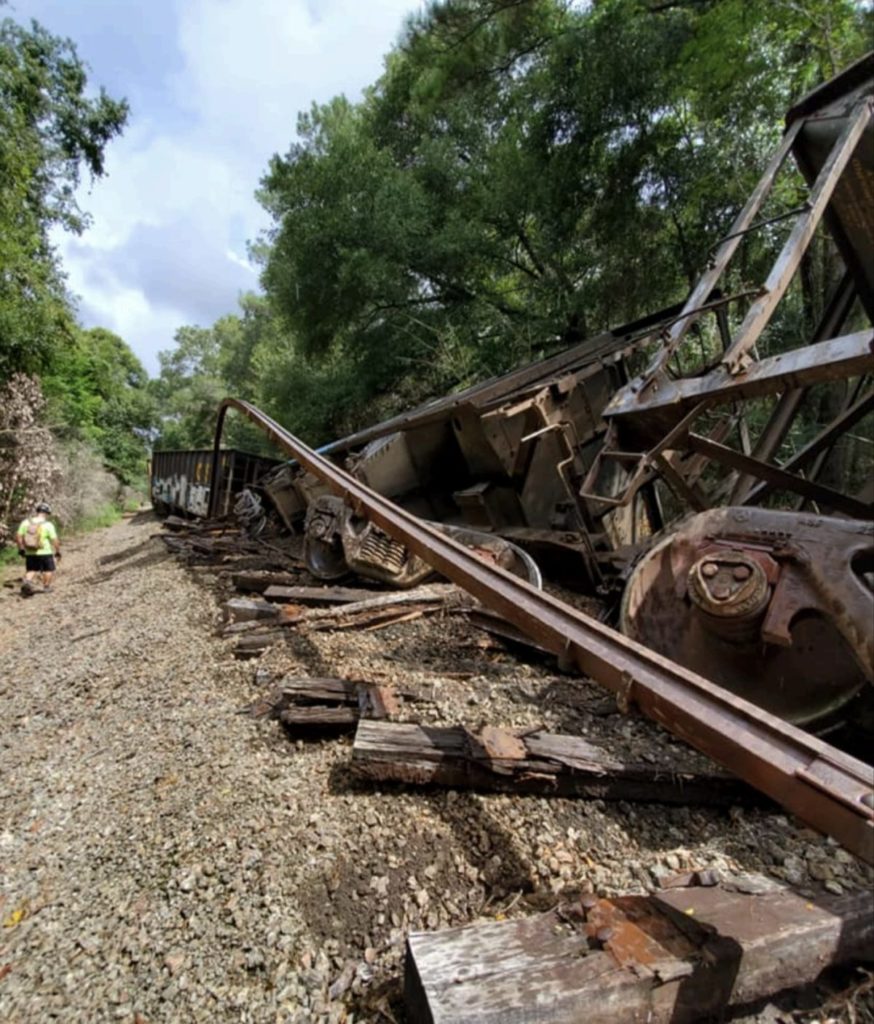
Barber touched on many of the same points, and stressed that the derailment and underlying issues on the track made for the “perfect time” for the city to act.
On Tuesday, Barber once again reiterated many of the same talking points that he has stated for several years, referring to the railway as a “remnant” of the past that was made in 1895.
“It probably was the best thing to ever happen to Ocala when it got here. It’s my opinion that the best thing for Ocala that could happen today would be for it to go away,” said Barber.
Barber went on to say the rail line is “out of date, obsolete,” is in horrible condition, and has derailed four times in the past decade.
“We have been lucky all those four times. I can’t imagine if an oil spill would have happened in downtown Ocala, or at anybody’s private residence or private property,” said Barber. He said he wanted the city to direct staff to directly connect with CSX, the owner of the rail line, not with the “short line operator.”
“The rail lines have very little oversight nationally. They’re way up here,” said Barber motioning above his head. “I don’t know that any regulatory board hears of the derailments that happen in Ocala.”
Barber said he felt the removal of the railway would be an opportunity to “spur economic development, increase property values, and increase the quality of life for” residents, visitors, and businesses.
“The county, as you know, over the written objections of the city of Ocala, granted approval of a special use permit that would have tied up that rail line for 50 years. Thankfully the company backed out, gave us another chance. Let’s not let it slip by this time,” said Barber.
Dreyer and the other council members reopened the conversation and largely lent their support to Barber, tasking Lee with moving forward with discussions to end the railway.
During that discussion, councilman Jim Hilty, Sr., indicated that he had read CSX might be attempting to sell its assets and divest from the industry.
According to a report from Yahoo! Finance, in the last year, CSX insiders have sold a “substantial stake in the company.” Along with other indicators including the sale of rail lines and the like, financial experts say the move by CSX is an indication that the company is gearing up to sell or divest assets.

Lee said that the city would engage in discussions with CSX and the Federal Railroad Administration, but that he also wanted to develop a citizens group to get input from the public.
Musleh suggested an advisory board comprised of citizens, Mayor Ben Marciano, and a council member. Dreyer said she believed that type of board was already “in the works.” The board all agreed that the city needed to “strike while the iron is hot” in order to make the change.
Lee concluded the conversation by suggesting that previous discussions with citizens initially explored a “rail to trolley” conversion before the “rail to trail” conversion was deemed preferable.
What are your thoughts on the potential conversion of Ocala’s rail lines to a multimodal trail? Share your comments below or, if you have more to say, write a letter to the editor.