
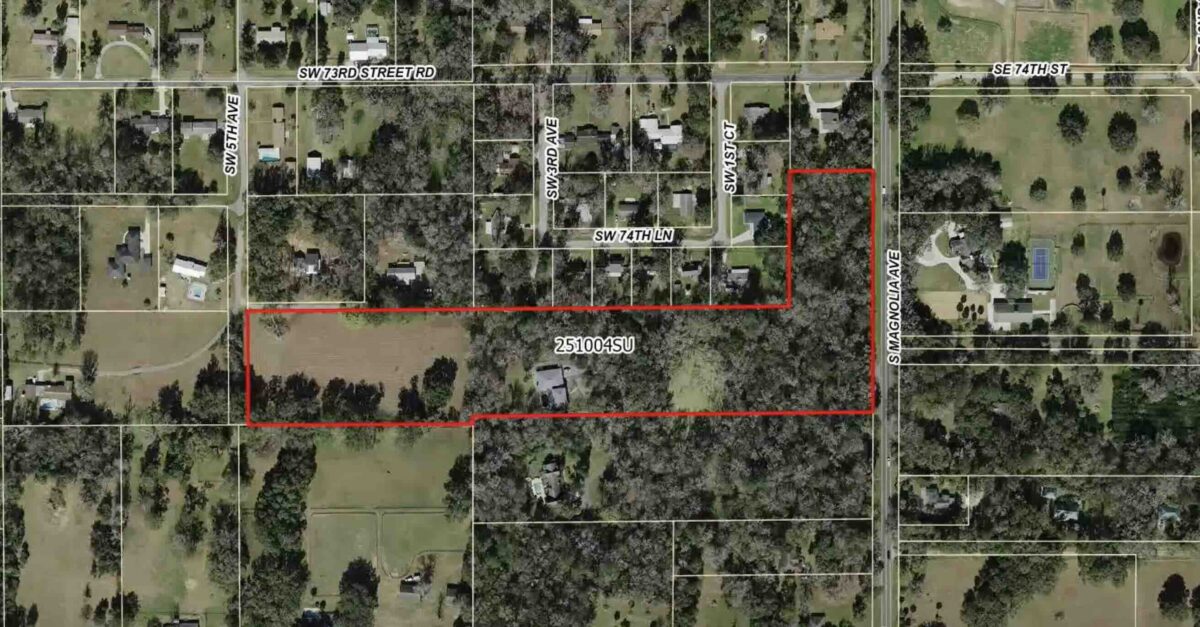
Marion County officials approved an Ocala couple’s request to transform their nearly 12-acre property into a mini-farm with small cows, pygmy goats, up to 40 chickens, and solar-powered barns.
During Tuesday’s meeting of the Marion County Board of County Commissioners, board members unanimously approved the special permit use request from Kevin and Barbara Marovich for their property at 7600 S. Magnolia Avenue in Ocala.
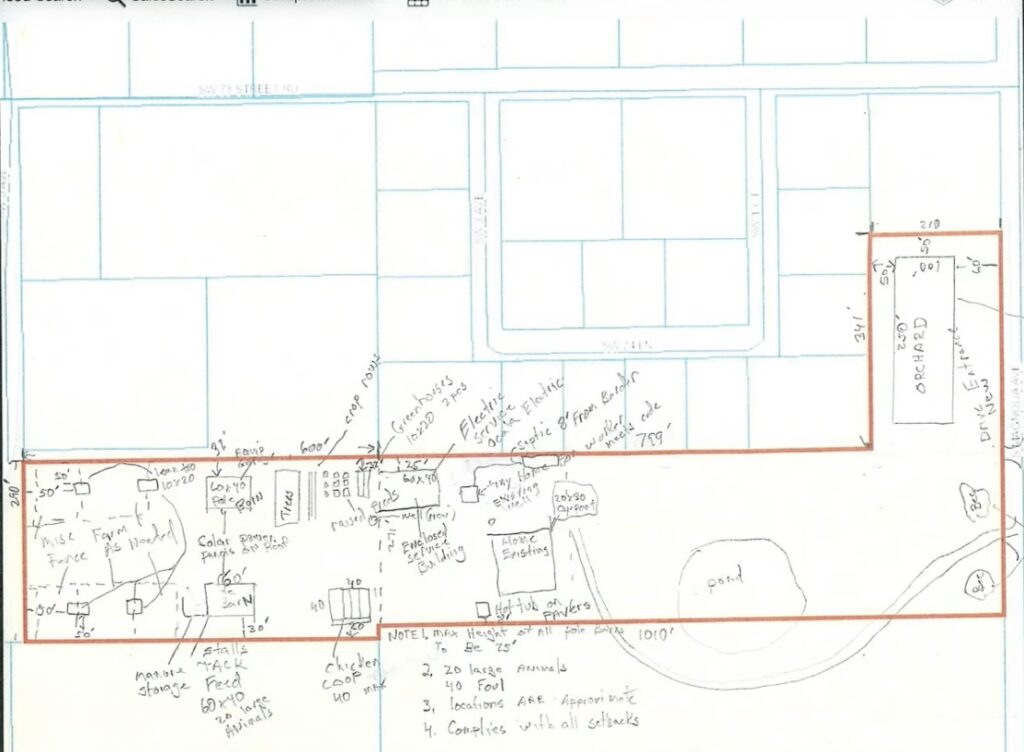
Ultimately, commissioners approved the permit upon the condition that the couple be limited to six miniature cows, four pygmy goats, and up to 40 chickens. They also agreed to keep the manure from the animals sealed on the property until it it was removed.
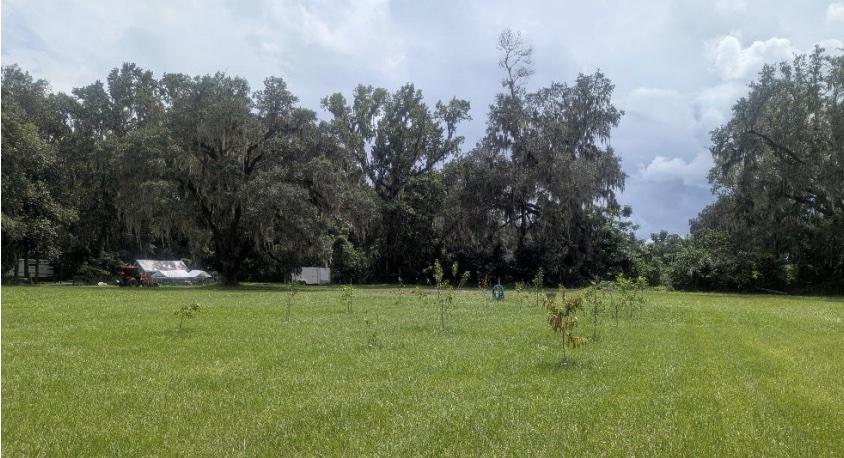
In addition to the livestock, the couple also hopes to plant an orchard, fruit trees, and also possibly maintain beehives at the site. There will be no large animals and no roosters on site.
Although the couple had also sought to keep three horses on the property as well, county staff clarified that the two acres of open pasture space on the 11.78-acre site is not enough. If the Maroviches wanted to keep horses in the future, they would have to expand their green space area, routinely rotate paddocks, and fertilize the area differently.
During public comments on the topic, multiple neighbors in nearby properties took to the podium to share their thoughts on the matter.
Samantha Smith expressed concerns about elevation and runoff, citing the “pesticides and insecticides from the animals and the orchards.”
“Right now, the water district does not classify us as a delineated area. And I would like to keep it that way. Their pasture backs up to me, so is everything going to be in that open area?” asked Smith.
Another neighbor, Toni Leitner, expressed her opposition to the project as well, claiming she was never notified of the first meeting about her neighbor’s request.
“I strongly oppose the special use permit and believe it should be denied outright due to misrepresentations, lack of transparency, and procedure failures. The applicant bought this property over in the past year, yet months later pursued this special use permit,” said Leitner. She went on to suggest that she did not believe that the property owner would keep commercial sales from the site.
“If there are truly no sales on site, and this is just a hobby farm for extra eggs and honey, why form a formal business entity…at the same address months before the special use permit process?” said Leitner.
She concluded her remarks by suggesting that her “property is 22 feet lower in elevation” and that “uphill activities risk runoff, drainage issues, waste contamination, or flooding, impacting downhill homes.”
“I urge the board to deny this permit completely with no conditions and no amendments,” concluded Leitner.
In a response to the resident, Board Chairman Carl Zalak III disputed the veracity of Leitner’s claims.
“You assuming that because somebody forms a company name, that that in itself – that doesn’t make any sense. I mean, people set up LLCs or whatever they want all the time for protection of assets. I’m not trying to be disrespectful, but that doesn’t mean they’re going to sell their eggs out of their farm or at the farmer’s market,” said Zalak.
In response, Leitner doubled down and once again alleged that Mr. Marovich did not disclose his business’s name “during the process” of requesting the special use permit.
“We don’t ask that on the application, so what I’m trying to figure out though is that you said – listen when we look at these things, we look for substantial legal evidence of an issue, right? As well as, how it’s going to affect the neighbors. My point is is that what problem did you see with the application that wasn’t done correctly by either our staff or the applicant that would make it null and void,” asked Zalak.
“Well, I guess nothing with the application, but with the notices, that was not sent to me,” said Leitner.
When asked about the specific meeting by Zalak, Leitner reiterated that it was the “first meeting” and the first time that Mr. Marovich tried to change his property.
“I wasn’t informed of that meeting, so that’s why I’m saying proper – I wasn’t given the notification that I was supposed to be, living right behind him,” said Leitner.
“Maybe you didn’t get it, it was probably due to the Post Office, quite frankly. Because we do send out all the mailings that we do,” said Commissioner Kathy Bryant.
Another neighbor, Kimberly Scott and her husband, both said they had no complaints about any of the livestock and simply asked that the proposed buffer on their property be removed.
“We like the view that we’re seeing. Whether there’s 40 animals or not, we don’t want the buffer, we want to see. We live in the country to be in the country, not to look at a hedge,” said Scott.
Now that it has been passed, the special use permit will be in effect for five years. The permit is non-transferrable and may be revoked in the face of persistent code violations.
The Marovich property is currently zoned for Single-Family Dwellings (R-1), a classification that typically restricts intensive agricultural operations.
According to the development plans, the couple intends to build open pole barns measuring 60 feet by 40 feet, with a maximum height of 25 feet. These structures will house stalls and tack rooms and are designed to operate entirely off-grid, utilizing solar energy systems for power.
In addition to the construction, the owners assert that their agricultural approach of planting trees and crops will improve soil retention and help manage stormwater runoff to benefit adjacent properties.