
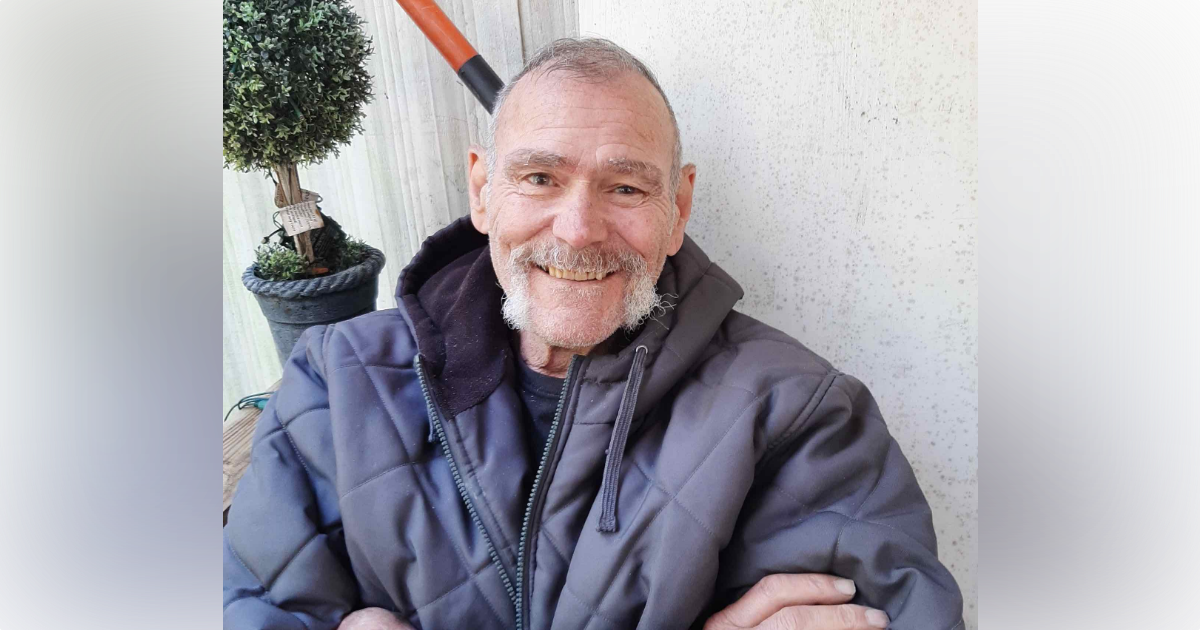
The family of a 73-year-old disabled Vietnam veteran, whose 2023 death while in the custody of the Marion County Sheriff’s Office was ruled a homicide, is set to meet with the agency for mediation and possible settlement in the case.
The family of the late Dennis J. Di Genova, Sr., is scheduled to meet with legal representation from MCSO on Monday, April 20. The court recently appointed Carl B. Schwait as mediator for the session, which will be held via Zoom.
The wrongful death lawsuit accuses Sheriff Billy Woods and deputies Jason Lester, Charles Cici, and Justin Douglas of using excessive force on the “special needs” veteran before leaving him immobile on a cell floor for two days.
On Wednesday, Judge James S. Moody, Jr. granted an unopposed motion from the Sheriff’s Office to extend the deadline for expert disclosures by 30 days, specifically for consultations with medical experts in neurology.
The lawsuit stems from Di Genova’s arrest on July 17, 2023, after he called 911 to report a trespasser. That trespasser was eventually identified as Di Genova’s roommate.
Following a dispute in which both the veteran and his roommate both informed deputies that Di Genova was disabled with a visible pacemaker and chronic back and neck problems, Di Genova was arrested for aggravated assault.
The complaint alleges that during the intake process on July 18, deputies Lester, Cici, and Douglas took Di Genova into a “change-out room” with no video surveillance.
There, deputies allegedly used pepper spray and an electronic disabling device on Di Genova after he was unable to comply with a strip search. Attorneys for the family argue the search had no “penological purpose” as Di Genova was only wearing underwear and slippers and had already passed a full-body scan.
The complaint accuses Deputy Douglas of “standing by” and watching the other deputies “batter” Di Genova, “knowing that it was unjustified, but did nothing to intervene or discourage the beating despite knowing he had a legal obligation to do so.” Additionally, it alleges that Douglas failed to provide information to the other deputies about Di Genova’s “many physical ailments” of which he was aware.
Di Genova was examined by a nurse shortly after the “use of force” and was found with “two probe impact sites, signature marks from the Taser to Di Genova’s right buttock and lower right leg, a cut on his left elbow and a cut on his left wrist.” After the medical assessment, Di Genova was assisted “into a wheelchair by Cici and Lester” and was transported to a medical pod on “suicide precaution status” after he stated that he needed to be Baker Acted.
During this time, he remained on the floor for over 48 hours and never stood or supported his own weight. Additionally, a cellmate allegedly kicked him while he was laying on the floor.
He refused all meals until he was admitted into the jail infirmary, where he ate with the assistance of staff. At the time, it was noted that Di Genova “smelled like urine and body odor and had multiple injuries.”
When he was finally assessed and transported to a hospital on July 20, in an ambulance ride to the facility, Di Genova was reportedly “weak and unable to speak clearly,” telling medical staff he’d been “beaten by police.”
Doctors observed bruising, swelling, and abrasions across his body, including his neck and knees. A CT scan revealed a complete cervical spinal cord transection and multiple neck fractures.
Di Genova died eight days later. He was buried at the Florida National Cemetery in Bushnell, as a veteran of the Vietnam War.
An autopsy conducted after Di Genova’s death found that he died “due to complications of a cervical spine fracture sustained in altercations with others.” The Medical Examiner ruled Di Genova’s manner of death as “homicide.”
According to the original complaint, a jail sergeant allegedly told hospital staff Di Genova had fallen and refused care.
In their formal answer to the lawsuit, Sheriff Woods and the involved deputies denied all claims of wrongdoing, asserting that their actions were conducted in an “objectively reasonable belief” that the force used was necessary and legal.
The defense maintains that the deputies are entitled to qualified immunity, arguing they acted in “good faith and without malice” to protect Di Genova, themselves, and the community.
Furthermore, the Sheriff’s Office rejected the claim of systemic failure at the jail, stating there was no policy or custom that caused a constitutional violation.
The mediation on April 20 represents a formal attempt to resolve the litigation, with the family seeking damages in excess of $75,000.
Despite the arrest that preceded Di Genova’s death coming in connection with a 911 call that he himself had initiated, on July 19, 2023, in the Marion County Sheriff’s Office “Marion Rundown” segment posted on social media, MCSO referred to Di Genova as a “violent person,” commending Deputy Douglas for “getting that violent person off the streets.”
For more than five years preceding his death, Di Genova allegedly made a total of 16 calls to 911 for which MCSO was dispatched. The complaint cites two different wellness checks conducted in February 2020 and a third incident in March 2020 wherein Di Genova reported a person trespassing on his property and requested a “medic for a broken wrist.”